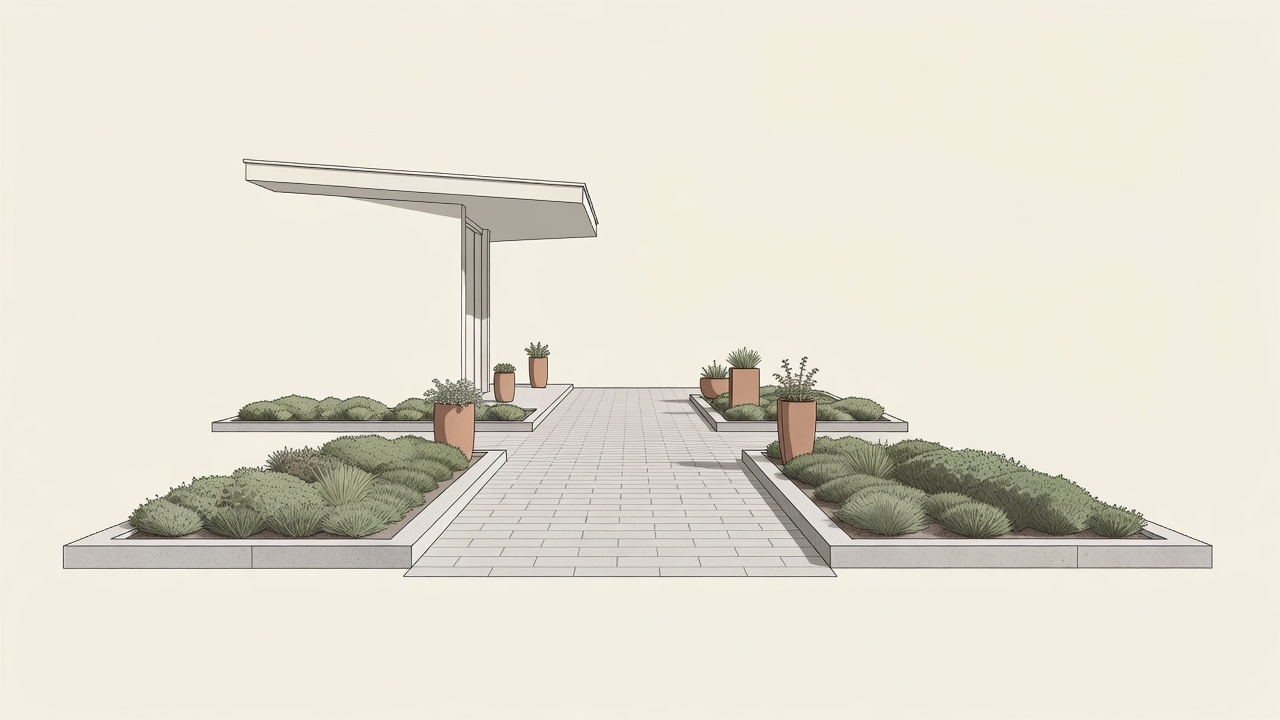
Planting can soften a structure, but it cannot repair a poor location or a route that nobody enjoys using. Start with the whole garden: the door you leave from, the places people already pause and the ground that stays wet after rain. The pavilion should join that pattern rather than sit apart as a finished object.
Read what the garden is telling you
Spend time outside at the hours you expect to gather. Notice direct sun, reflected heat from walls, breezes and the changing shade of nearby trees. A location can be pleasant in spring and uncomfortably exposed in summer. Keep a simple record rather than making the decision from a single fine afternoon.
Observe the ground after rainfall. Mark persistent puddles, worn shortcuts and areas where soil is compacted. These are clues, not a drainage diagnosis. A qualified landscape or drainage professional may be needed to understand levels, soil behaviour and appropriate water management before construction begins.
Include what is already valuable. A mature tree, an established hedge or a useful view may deserve more influence than a new structure. Do not cut roots, raise soil levels or store construction materials around trees without appropriate advice. The Arboricultural Association can help you understand how to find suitable tree expertise in the UK.
Give people and water different routes
The best approach is usually direct enough to feel obvious and generous enough for its users. Test it while carrying food, moving a chair or using any mobility equipment relevant to the household. Think about edges as well as width: foliage that brushes a shoulder when dry can be an unpleasant obstacle after rain.
Choose surfaces for stability, maintenance and wet-weather behaviour, not appearance alone. Loose gravel can migrate and may be difficult for some wheels or walking aids. Paving needs suitable installation and a surface that remains appropriate in use. Small changes in level deserve particular attention because they are easy to overlook.
Roof water should not discharge onto the main walking line. Neither should a new paved area send runoff toward the house or neighbouring land. Permeable paving may help in suitable circumstances, but its effectiveness depends on construction, ground conditions and maintenance. It is not a universal fix for a wet garden.
In the UK, CIRIA’s SuDS Manual, C753, and guidance from the relevant local authority are useful starting references for sustainable drainage discussions. They do not replace site investigation or any required approvals. Ask the designer to explain where water goes during ordinary rain and what happens during a heavier event.
Choose plants for the place they will live
Match plants to the actual light, soil and exposure. Check mature height and spread before buying; the open gap beside a new shrub can disappear surprisingly quickly. The Royal Horticultural Society’s plant information is a useful research starting point, especially when combined with advice from a knowledgeable local nursery.
Keep entrances legible. Low planting near a route can soften the edge without hiding a step or narrowing passage. Place larger forms where they help define a seating area or filter a view. Avoid thorny, irritating or potentially harmful plants where children, pets or close contact make them unsuitable.
A climber can change the feeling of a pavilion, but it also adds weight, moisture and maintenance demands. Agree the support system with the structure’s designer and preserve access for inspection. Do not assume every attractive climber is suitable for every post, roof or local climate.
Containers are useful for testing an arrangement, but they bring their own watering and weight considerations. Choose stable pots, protect necessary drainage openings and do not let runoff create a slippery patch. Move large containers only with suitable help and equipment.
Leave room for growth and ordinary care
Think about the garden in several seasons, not just at planting time. A deciduous screen may admit useful winter light but provide less privacy. Evergreen planting can offer continuity while becoming dense if poorly placed. A mixed approach often gives more flexibility than a single solid boundary treatment.
Keep wildlife in the conversation. Existing hedges, flowering plants and dark corridors can have value beyond their decorative role. The Woodland Trust, Royal Society for the Protection of Birds and Bat Conservation Trust provide useful background on habitat-sensitive choices. Check local protections before disturbing nests, roosts or established vegetation.
Finish with a maintenance walk. Can you reach the gutter, cut back planting, inspect timber and move a chair without stepping into a bed? Is there a practical place for a watering can and stored tools? A landscape that allows these small tasks to happen easily is more likely to remain welcoming.
Start with fewer well-placed elements if the budget or time is limited. A dependable route, a comfortable clearing and a small amount of healthy planting can connect a pavilion to its garden more convincingly than an overcrowded scheme.
Planning note: make an edge checklist
For each side of the pavilion, record the view, sun, wind, water movement, planting space and maintenance access. Give every edge a useful role before adding decorative detail.
Bring the decisions back to daily life
The finished garden should make your regular gathering easier, not create a list of new chores.